Compare sleeve applicator machines
Review automatic, rotary, horizontal and tunnel-based sleeve applicator routes.
Open page →Line layout
A sleeve applicator can sit inside a production line or operate as a standalone sleeving cell. The right route depends on upstream equipment, operators, floor space, speed, accumulation and how often products change.
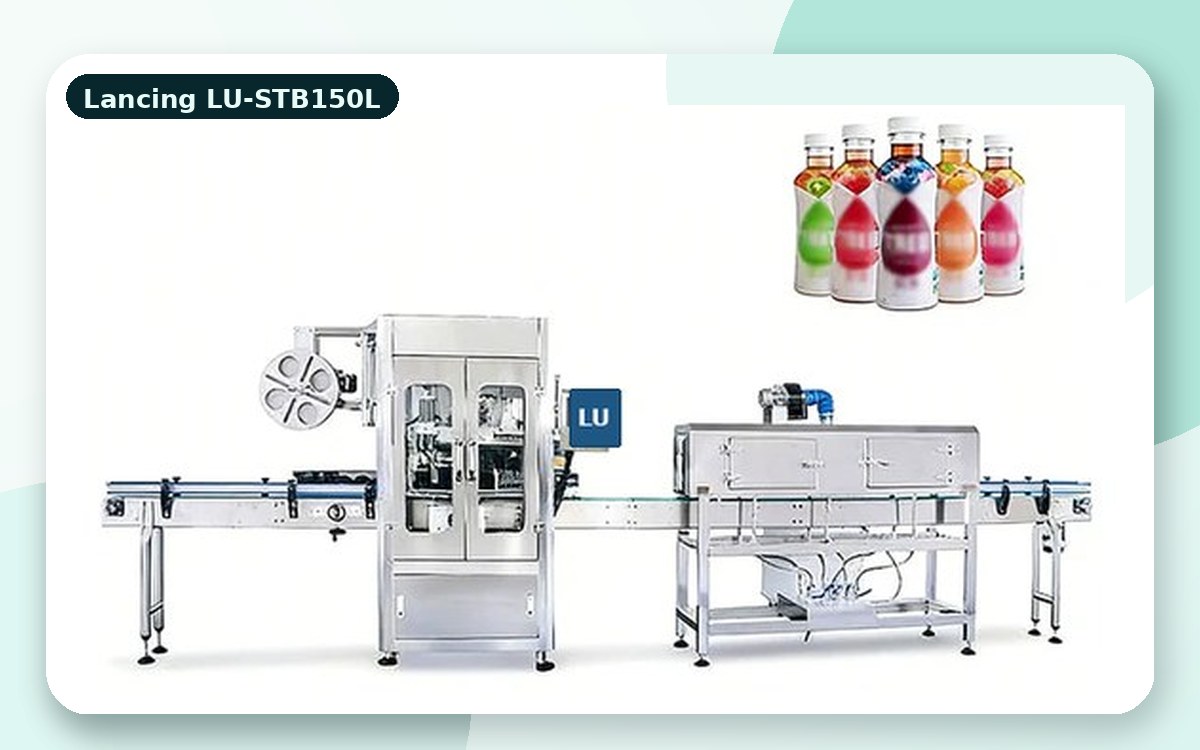
Integrated lines
Inline sleeving reduces manual handling and keeps products moving from filling and capping towards packing. It needs clear control of product spacing, conveyor transfers and tunnel discharge.
Flexible cells
Standalone sleeving cells can work well for small batches, contract packing, seasonal products or sites where the main line cannot be interrupted.
Avoid poor fit
Small pack or sleeve differences can change the correct applicator, mandrel, conveyor and tunnel arrangement. These checks help prevent a machine being chosen on headline speed alone.
Quote details
For a useful recommendation, send the container dimensions, filled weight, sleeve material, lay-flat, cut length, target output, photos or drawings, and where the sleeve needs to sit on the pack. If the project is going into an existing line, include available conveyor height, line direction, utilities and footprint.
Related pages
These pages keep the search route connected to the right machine type, application and quote checklist.
Review automatic, rotary, horizontal and tunnel-based sleeve applicator routes.
Open page →Check the practical buying factors before choosing a machine, tunnel or complete line.
Open page →Send pack, sleeve, output and layout details to Lancing for a practical recommendation.
Open page →FAQ
Sometimes, but utilities, tunnel extraction, conveyor height and guarding should be considered from the start.
Many lines benefit from upstream or downstream accumulation to prevent short stops affecting the whole process.
Send floor space, line direction, conveyor heights, product flow and where operators can access the line.
Project support
Lancing can review the packaging format, sleeve material, shrink tunnel requirement and line layout before recommending the most suitable sleeve applicator configuration.