Compare sleeve applicator machines
Review automatic, rotary, horizontal and tunnel-based sleeve applicator routes.
Open page →Tunnel comparison
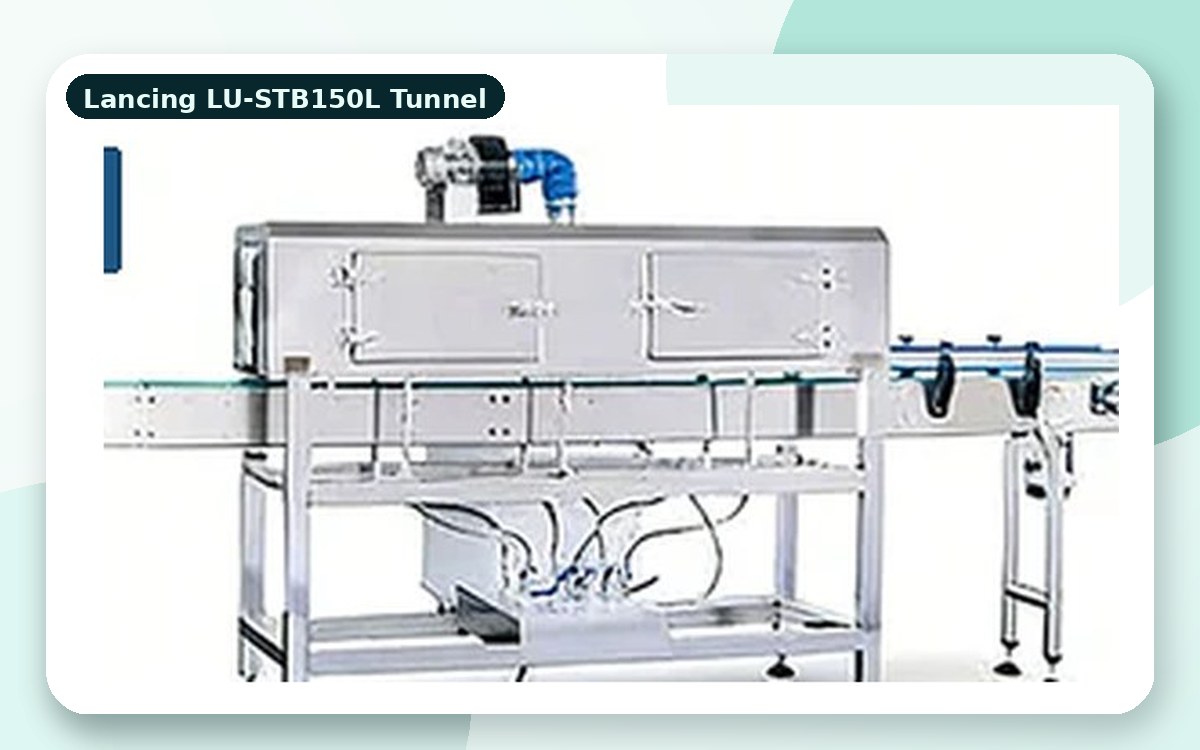
The tunnel is often the part of a sleeve labelling line that decides the finished result. Steam and electric heat can both shrink sleeves, but they behave differently on shoulders, tapers, lightweight bottles and short tamper bands.
Shrink quality
Steam surrounds the sleeve more evenly, so it can be helpful for shaped bottles, curved shoulders and full-body labels where the artwork must settle into the container profile.
It can be a stronger route when the sleeve has a large shrink percentage or the pack has areas that would otherwise wrinkle under directional hot air.
Utilities and footprint
Electric heat tunnels are often easier to install where steam is not available. They can suit neck bands, cap seals and straightforward bottle sleeves where the shrink area is short and predictable.
Avoid poor fit
Small pack or sleeve differences can change the correct applicator, mandrel, conveyor and tunnel arrangement. These checks help prevent a machine being chosen on headline speed alone.
Quote details
For a useful recommendation, send the container dimensions, filled weight, sleeve material, lay-flat, cut length, target output, photos or drawings, and where the sleeve needs to sit on the pack. If the project is going into an existing line, include available conveyor height, line direction, utilities and footprint.
Related pages
These pages keep the search route connected to the right machine type, application and quote checklist.
Review automatic, rotary, horizontal and tunnel-based sleeve applicator routes.
Open page →Check the practical buying factors before choosing a machine, tunnel or complete line.
Open page →Send pack, sleeve, output and layout details to Lancing for a practical recommendation.
Open page →FAQ
No. Steam can give excellent shrink quality on difficult shapes, but electric or hot-air tunnels can be suitable for short bands, simple containers and sites without steam utilities.
Yes. The best route depends on sleeve material, shrink percentage, container shape, output and the utilities available on site.
For shaped containers, lightweight bottles or premium artwork, sample testing is strongly recommended before the final tunnel is confirmed.
Project support
Lancing can review the packaging format, sleeve material, shrink tunnel requirement and line layout before recommending the most suitable sleeve applicator configuration.