Sleeve material
PVC, PET/PETG, OPS, PLA or other materials can behave differently during shrinking and should be checked against the tunnel route.
Full-body sleeve applicators
Compare full-body sleeve labelling machinery for 360-degree decorative sleeves, shaped containers and high-coverage product presentation.
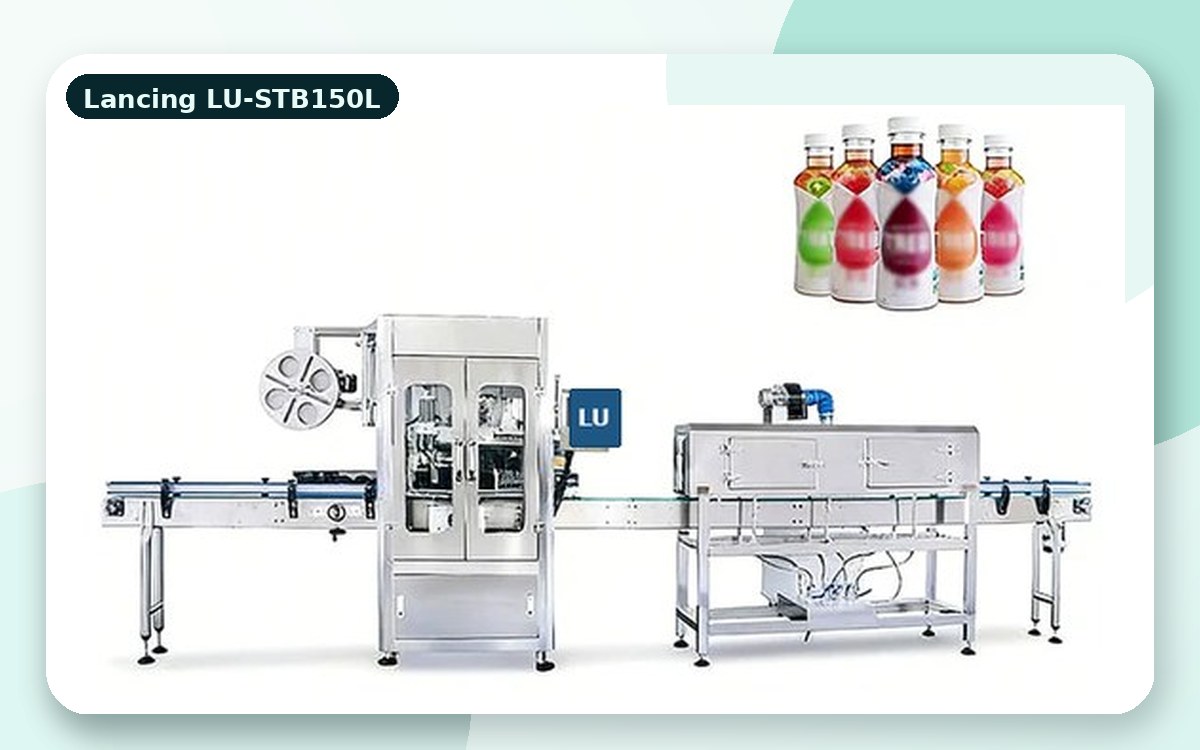
Decorative sleeve labelling
Full-body shrink sleeve applicators place a printed sleeve over the main container body before it is shrunk into position. They are often used when a pressure-sensitive label cannot deliver enough coverage, when the container is shaped, or when brand presentation needs a 360-degree sleeve.
The applicator, conveyor and tunnel should be selected as a system. Sleeve alignment, seam position, artwork registration, bottle rotation, container taper and tunnel shrink profile all influence the finished pack.
Planning
PVC, PET/PETG, OPS, PLA or other materials can behave differently during shrinking and should be checked against the tunnel route.
Curved shoulders, square edges and grip features may need controlled shrink and sample testing.
Artwork position, seam orientation and barcode placement should be checked before production specification.
Steam shrink may require drying or moisture handling after the tunnel, depending on the product and line layout.
Spacing and timing need to match the sleeve drop, cut length and tunnel throughput.
Format families should be reviewed so change parts and adjustments are practical for operators.
FAQ
Full-body sleeves are useful when you need high visual coverage, shaped-pack decoration or a sleeve that covers more of the container than a conventional label.
Often yes, but shaped and tapered containers should be tested because shrink quality and sleeve positioning become more sensitive.
Check container samples, sleeve material, lay-flat, cut length, seam position, artwork registration, tunnel type, output and available footprint.
Project support
A useful sleeve applicator shortlist starts with the real pack: container shape, sleeve lay-flat, cut length, required position, tunnel type, production speed and line layout.