Container handling for sleeving
Review pack pitch, stability, transfers, guides and accumulation.
Open guide →Existing-line integration
A successful retrofit aligns product handling, tunnel process, utilities, controls, safeguarding and installation work with the behaviour of the operating packaging line.
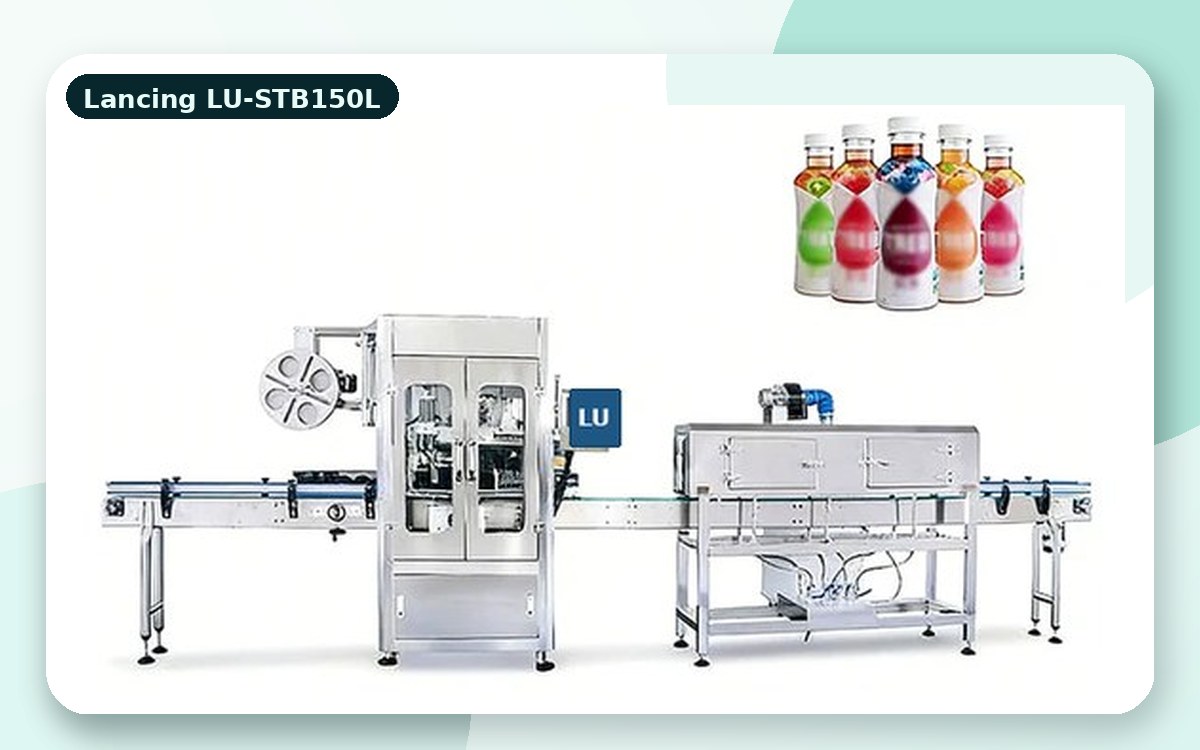
Existing-line survey
A retrofit is not simply a question of fitting the applicator into an empty length of conveyor. The line must create suitable pack spacing, keep the container stable during sleeve placement and provide a controlled route through the tunnel and into downstream equipment.
Survey the physical line while it is running representative formats. Record normal accumulation, micro-stops, access routes and operator tasks as well as dimensions.
Integration matrix
Product handling
Light, tall, tapered or unstable containers may need dedicated timing screws, belts, guides or base support. The problem can be more demanding during stop and restart than during a steady run. Include the lowest and highest line rates and realistic upstream gaps in the trial.
Use the container-handling guide and retain video of the existing line where it helps explain pack behaviour.
Controls and inspection
A sleeved pack waiting before the tunnel can move, relax or be exposed to a different thermal history. Define line-clearance, restart and inspection rules. If the line includes coding, vision or reject equipment, determine whether the sleeve changes access, contrast or product tracking.
The controls guide provides a signal and reject framework.
Quotation preparation
Distinguish new equipment from modifications to existing conveyors, controls, guarding and utilities. Include who will remove old equipment, make site services, manage production permits and restore the line if an interface is not ready.
Use the quotation comparison guide before award.
Buyer questions
Sometimes, but it must be surveyed. Conveyor width, height, speed control, product pitch, stability, transfer points, available straight length and tunnel requirements can make modification or a dedicated conveyor section necessary.
Identify line ownership, start and stop signals, ready/fault states, speed reference, emergency-stop boundary, accumulation strategy, coding or inspection interlocks and available spare I/O or network interfaces.
It depends on the mechanical, electrical, utility and validation scope. Plan installation stages and prerequisites so work that can be completed off-line is separated from the final production shutdown.
Yes where pack stability, sleeve opening, tunnel finish or production rate is uncertain. A representative trial can change the required handling, tunnel or inspection arrangement.
The contract and interface schedule should state responsibilities for each machine, conveyor, control signal, safety function, utility and acceptance result. Avoid leaving overall performance as an unstated assumption.
Related technical guidance
Use these connected pages to move from the current decision to a controlled machine, sleeve and tunnel brief.
Review pack pitch, stability, transfers, guides and accumulation.
Open guide →Define the line signal, fault, pack-tracking and reject boundary.
Open guide →Bring site works, interfaces, trials and acceptance into the same comparison.
Open guide →Project support
Lancing can review the container, closure, sleeve reel, required finished position, tunnel route, production conditions and existing line interfaces before recommending a machine configuration.