Shrink tunnels
Compare the process variables that determine heat transfer, residence condition, cooling and repeatability.
Open guidance →Thermal suitability
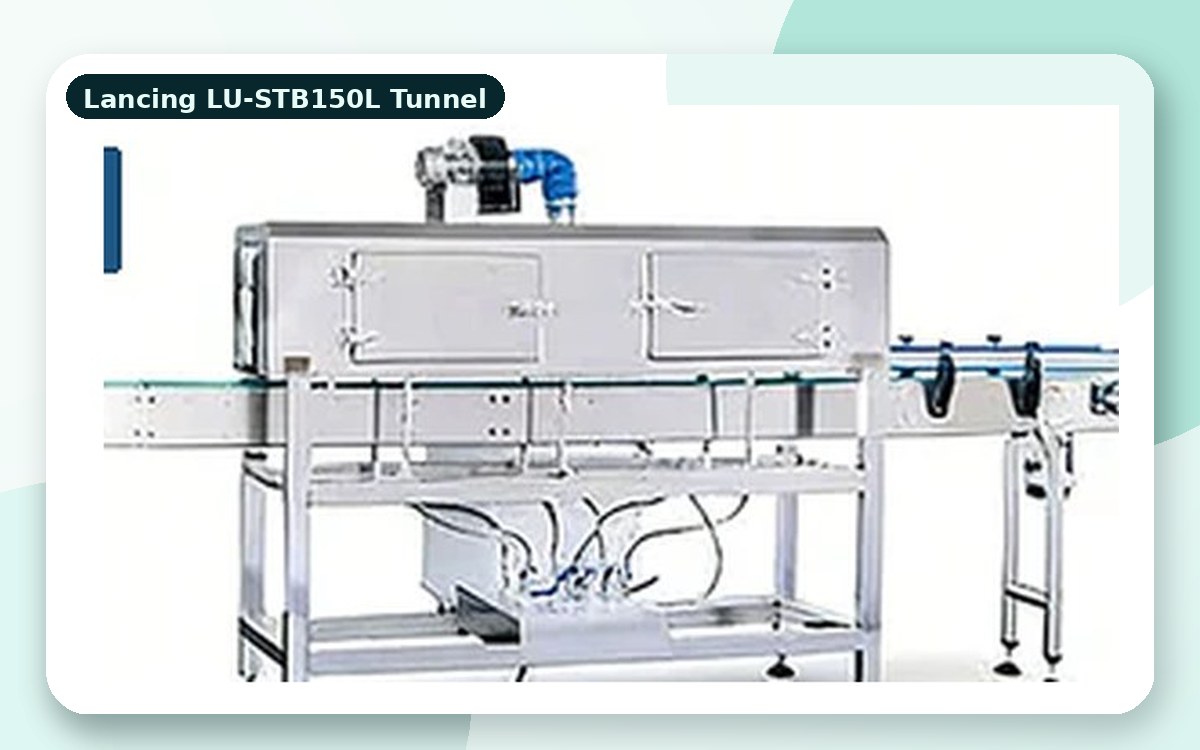
Heat-sensitive products and containers may be suitable for shrink sleeves, but suitability has to be demonstrated on the real pack. The relevant question is not only the tunnel set-point: exposure time, heat-transfer method, container material and wall section, product temperature, closure design, sleeve coverage, cooling and line speed all influence the result.
Answer in brief
Suitability depends on heat-transfer method, exposure time, conveyor speed, pack spacing, container material and wall section, closure design, product temperature, sleeve coverage, cooling and the acceptable finished result. The displayed tunnel set-point alone does not describe the thermal load received by the product or pack.
A controlled trial should record the starting pack and product condition, the actual sleeve and artwork, tunnel route and settings, dwell condition, cooling time and inspection result. Evaluate container shape, closure function, leakage, product condition, sleeve finish, perforation and barcode quality only after the pack has reached the agreed assessment condition.
Decision framework
Use this as a project-control framework. Final suitability depends on the actual container, closure, sleeve and production condition.
Buyer question
Thermal exposure depends on the heat-transfer method, zone settings, conveyor speed, tunnel geometry, air or steam distribution, pack spacing, initial pack temperature and how much sleeve material is shrinking against the surface. A displayed temperature is therefore not a complete description of the process. The approved recipe should be tied to the pack and measured finished result.
Record warm-up state and utilities as well as the operator settings.
Buyer question
No tunnel type is automatically gentler for every pack. Steam can transfer heat efficiently and may help complex contours, while hot air offers a different controllable heat profile. Either can be unsuitable if the recipe, exposure or pack design is wrong. The selection should be based on shrink quality and pack protection under the intended production condition.
Use the hot-air versus steam comparison as a selection framework.
Buyer question
Possible signs include panel movement, neck or base distortion, closure movement, loss of dimensional stability, surface marking, leakage, pressure change or a result that differs after cooling. The critical checks depend on the pack. Visual appearance alone may be insufficient where closure function, seal integrity or product condition is important.
Acceptance criteria should be agreed before the trial and checked again after the pack has cooled.
Buyer question
Record the exact container, closure, product or representative fill, starting temperature, sleeve construction, tunnel route, conveyor condition, recipe, exposure sequence and cooling time. Retain pre-tunnel and cooled samples and document any dimensional, closure or product checks. If a representative fill is used, state what it does and does not prove.
The tunnel settings guide provides a repeatable record structure.
Continue the decision
Use the connected pages to turn the answer into a controlled machine and trial brief.
Compare the process variables that determine heat transfer, residence condition, cooling and repeatability.
Open guidance →Use a controlled recipe and cooled-pack checks rather than relying on one displayed temperature value.
Open guidance →Follow a staged fault-isolation route when the pack, closure or product shows signs of excessive exposure.
Open guidance →Application review
Lancing can review the container, closure, sleeve reel, required position, shrink route, output condition and integration boundary before recommending an applicator configuration or sample trial.