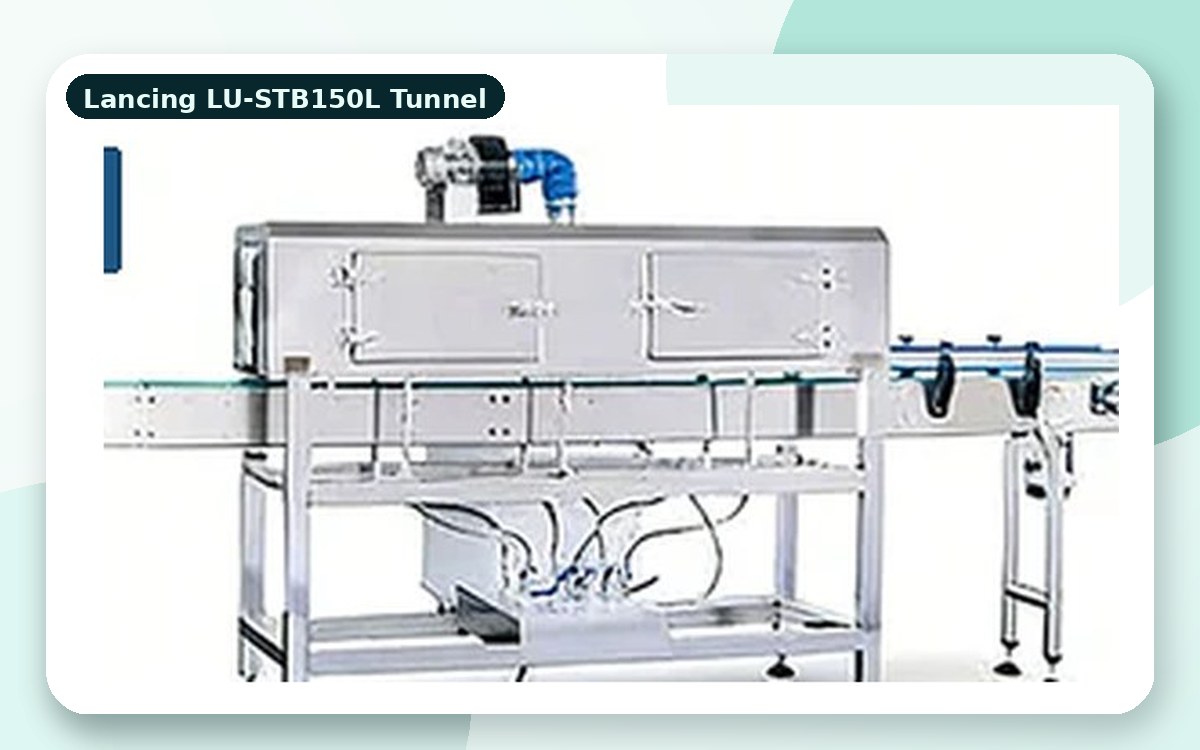
Shrink tunnels
Shrink Tunnels for Sleeve Applicators
Plan the shrink tunnel around sleeve material, container shape, utilities, shrink quality, output and integration with the sleeve applicator.

Shrink control
Shrink tunnels matched to sleeve material, container shape and utilities.
The tunnel is where the sleeve becomes the finished pack. Steam, hot-air and electric tunnels each have practical advantages depending on sleeve material, shrink percentage, container shape, moisture tolerance, energy availability and line speed.
A good tunnel specification considers temperature control, airflow or steam distribution, conveyor speed, drainage or drying, guarding, operator access and how quickly the line changes between formats.
Tunnel routes
- Steam shrink tunnels
- Electric shrink tunnels
- Hot-air shrink tunnels
- Moisture removal and drying
- Integrated conveyors
Compare
Practical tunnel selection points.
FAQ
Sleeve applicator questions
Do I need steam or hot air for shrink sleeves?
It depends on the sleeve material, container shape, shrink result, available utilities and production environment. Sample testing is the safest route.
Can a shrink tunnel be added to an existing line?
Yes, but conveyor height, footprint, utilities, guarding and downstream drying or packing should be checked first.
What affects shrink sleeve quality?
Sleeve material, shrink percentage, temperature profile, dwell time, airflow or steam distribution, container geometry and conveyor speed all matter.
Project support
Send the container, sleeve and output details before you choose a machine.
A useful sleeve applicator shortlist starts with the real pack: container shape, sleeve lay-flat, cut length, required position, tunnel type, production speed and line layout.
Tunnel qualification
Choose the tunnel from the sleeve shrink curve and the pack limits.
Steam and hot-air processes transfer heat differently. The correct route depends on the sleeve material, local shrink demand, container geometry, product sensitivity, site utilities and the condition required when the pack reaches downstream inspection or packing.
Electric describes an energy source rather than a finished-pack result. An electrically heated tunnel still needs a defined airflow, zone and dwell-time process, while a steam system needs steam quality, distribution, extraction, drainage and drying to be part of the specification.
Steam versus hot air
Steam can provide distributed heat around complex shapes, subject to the film, pack and site conditions. Hot air provides a dry route but still needs balanced airflow and sufficient dwell time around shoulders, corners and bases. Neither route should be selected from a generic temperature alone.
Where steam is unsuitable because of moisture or site services, test the dry route on the most demanding container. Where hot air cannot control local high-shrink areas, compare a steam trial before finalising the line.
Record a repeatable recipe
A recipe should identify the container and sleeve revision, conveyor speed, zone or steam settings, warm-up state and any cooling or drying arrangement. Keep good and faulty samples with the record.
Avoid correcting every defect by increasing heat. Wrinkles, twist and poor registration may originate before the tunnel; pack deformation, burn or splitting may indicate excess local energy or dwell.
Keep adjacent shrink intents separate
This page covers tunnels used with shrink-sleeve labels and tamper bands. For complete product or multipack shrink wrapping in POF, PE or PVC film, use Shrink Wrapping Machinery UK or Sleeve Sealers UK.
For a complete filling, capping, sleeving, inspection and packing line, use Packaging Lines UK for the wider integration scope.
Evidence pack for quotation and trial
- Film supplier data and controlled sleeve reels
- Representative containers including difficult shoulders, corners and bases
- Product, closure and container heat or moisture limits
- Good-output target and finished-pack acceptance criteria
- Site electrical or steam data, extraction, drainage and drying scope
- Recipe sheet, measured samples and tunnel video evidence
Buyer questions
Choose the tunnel from the sleeve shrink curve and the pack limits. buyer questions
Is steam always better for full-body sleeves?
No. It can be useful for complex shrink profiles, but the material, pack, moisture tolerance, utilities and sample result determine the correct route.
Is an electric tunnel the same as a hot-air tunnel?
Electric usually describes how heat is generated. The tunnel still requires an airflow, temperature-zone and dwell-time design that must be qualified on the pack.
Why use the film supplier’s shrink curve?
It provides a starting point for how the material responds. The actual container and tunnel trial is still required because local geometry changes the process demand.
How should barcode quality be checked?
Scan cooled finished packs produced at the intended process conditions and retain the artwork, film and recipe references with the result.
What causes water marks after a steam tunnel?
Condensation, pack surface, steam distribution and drying can contribute. Record the pack condition at exit and after the intended drying or cooling stage.
What should a tunnel performance test record?
Record the sleeve and container, line speed, settings, warm-up condition, duration, good output, defects, stops and the measured finished-pack criteria.
Recipe qualification
Approve a repeatable tunnel window, not one isolated finished sample.
A good sleeve produced once at a single setting does not show how the process will behave after warm-up, a normal stop, a speed adjustment or a change in pack condition. Tunnel qualification should identify the controlled inputs and demonstrate a repeatable operating window without deliberately exceeding the sleeve or container limits.
Choose steam or hot air from the pack and film behaviour
Steam can transfer heat around complex geometry, but it introduces requirements for steam quality, extraction, condensation management, drainage and drying. Hot air provides a dry process, but airflow balance, zone control and dwell time become central to the shrink profile. “Electric” normally describes the energy source for a heated tunnel; it does not remove the need to qualify airflow, temperature distribution and conveyor dwell.
Use the film supplier’s shrink curve as a starting input, then prove the actual sleeve on the actual pack. A steep local shrink demand at a shoulder, corner or base can move artwork or concentrate stress even when the overall sleeve material is suitable.
Keep the acceptance test functional
- Measure sleeve placement before the tunnel and finished coverage after cooling
- Scan barcodes on finished packs from start-up, normal running and restart
- Operate tamper-band perforations after the pack has cooled and dried
- Retain the exact film, artwork and container references with the recipe
- Record defects by type instead of grouping every reject as a tunnel fault
- Repeat the test after any material, seam, artwork or container revision
For multipack or product shrink wrapping rather than sleeve labels, use Shrink Wrapping Machinery UK or Sleeve Sealers UK.
Send the tunnel trial inputs