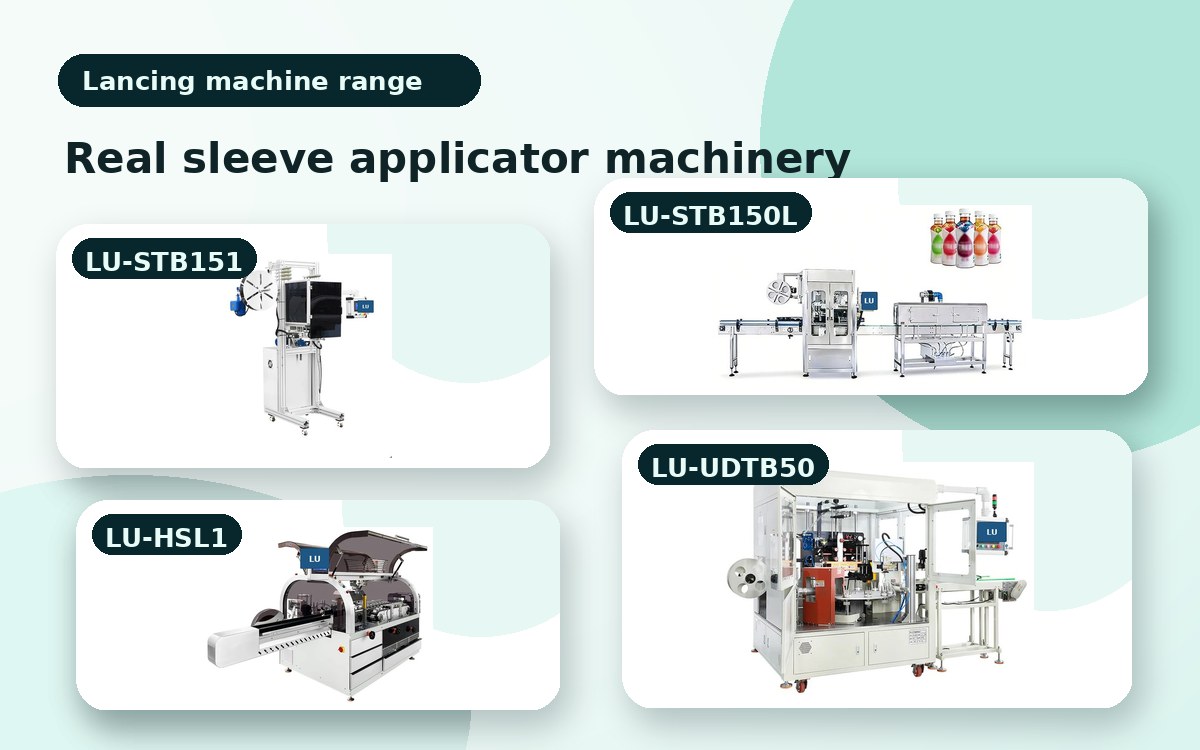
Sleeve applicator machine range
Compare the upright, horizontal, rotary and integrated application routes already covered by Lancing.
Open guidance →Process explained
A shrink sleeve applicator feeds tubular film from a reel, opens it over a former or mandrel, cuts one sleeve to length and places it onto a correctly spaced container. The container then passes through a separate heat or steam process that shrinks the sleeve to the pack. Application and shrinking are controlled as two linked but distinct stages.
Answer in brief
The applicator stage is controlled through a repeatable film path, a former or mandrel that opens the tubular film, a length or registration control, a clean cut and stable container presentation. The tunnel stage then supplies the heat transfer needed to conform the sleeve. Checking the unshrunk sleeve before the tunnel prevents application faults being mistaken for shrink-process faults.
Retain the reel identity, unshrunk cut samples, pre-tunnel position samples, cooled finished packs, applicator setup and tunnel recipe when a format is approved. That evidence allows a later feed, cut, placement or shrink change to be traced to the first process stage that moved away from the approved condition.
Decision framework
Use this as a project-control framework. Final suitability depends on the actual container, closure, sleeve and production condition.
Buyer question
The mandrel or former changes the flat tubular sleeve into an open shape that can pass over the container. It also guides the film through the feed and cutting area. Its profile, surface condition and clearance must suit the sleeve lay-flat and the actual pack; a sleeve that snags, collapses or opens inconsistently cannot be corrected by the shrink tunnel.
Buyer question
A printed sleeve is normally controlled by a registration mark or another repeatable print reference that a sensor can detect. The control system relates that signal to the required cut position. Plain film may be cut by a fixed length setting instead. The sensor, mark contrast, film tracking and cutter timing must be proved together on the production artwork.
For a detailed print-control explanation, use the registration-mark guide.
Buyer question
After the cut sleeve is placed, the container must remain stable and the sleeve must stay at the intended height and orientation while the conveyor transfers the pack into the tunnel. Excessive vibration, acceleration, air movement, back-pressure or contact with guides can move the unshrunk sleeve. Pre-tunnel samples therefore show whether a position fault started before heat was applied.
Container pitch, guide contact, conveyor transitions and the distance to the tunnel are part of the line trial, not merely installation details.
Buyer question
Separating the checks identifies the first stage at which the pack becomes unacceptable. A high, low, twisted or poorly cut sleeve before the tunnel points towards feed, cutting, placement or handling. A correctly placed sleeve that later wrinkles, pulls or distorts points towards the film, container geometry or shrink process. This prevents one stage being adjusted to conceal a fault created elsewhere.
The defect-source guide provides a practical isolation sequence.
First-party machine video
Use the video to follow the physical sequence: reel feed, film opening, container spacing, sleeve placement and transfer towards the shrink process. A video confirms visible motion, but final suitability still depends on measured samples, controlled materials and the production condition.
Continue the decision
Use the connected pages to turn the answer into a controlled machine and trial brief.
Compare the upright, horizontal, rotary and integrated application routes already covered by Lancing.
Open guidance →Use representative containers, closures, production sleeves and acceptance criteria to prove the complete process.
Open guidance →Review registration, container detection, line interlocks, fault handling and reject boundaries around the applicator.
Open guidance →Application review
Lancing can review the container, closure, sleeve reel, required position, shrink route, output condition and integration boundary before recommending an applicator configuration or sample trial.