Rotary shrink sleeve labeler
LU-UDTB50 Rotary Shrink Sleeve Labeler
A rotary shrink sleeve labeler route for cosmetic bottles, personal-care containers and cylindrical packs where controlled handling and sleeve finish are important.
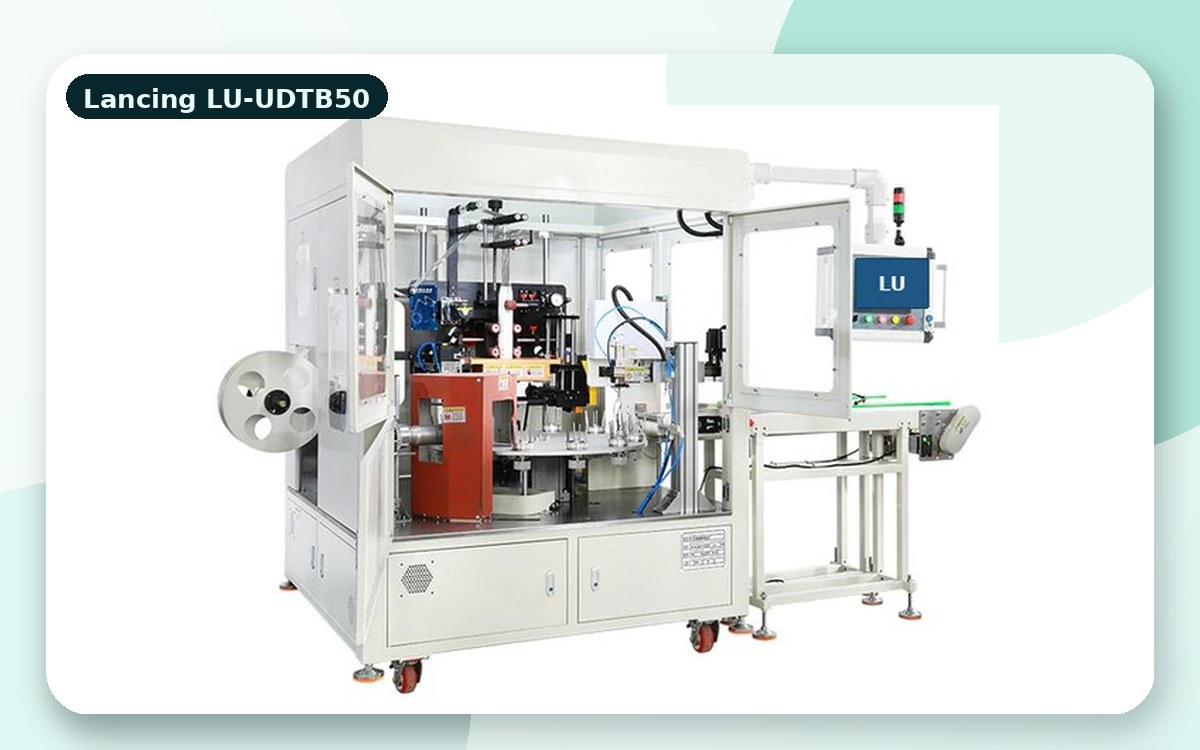
Where this machine fits
LU-UDTB50 for real sleeve applicator projects.
Cosmetic, personal-care, hygiene and pharmaceutical-style packs that benefit from rotary handling and repeatable sleeve placement.
This page gives a practical shortlist view. Final selection should still be confirmed against your actual container samples, sleeve material, sleeve lay-flat, cut length, target output and tunnel requirements.
Best-fit applications
- Cosmetic bottles and personal-care containers
- Products needing controlled rotary presentation
- Sleeves requiring neat finish on premium packaging
- Projects where diameter and pack handling will be customised
Technical overview
LU-UDTB50 key specifications.
Use these figures as a starting point for line planning. Customisation, tooling and sample testing can change the final specification.
Related Lancing LU models
Compare this model with other sleeve applicator routes.
Different packs may need a compact applicator, a complete applicator-plus-tunnel line, rotary sleeve handling or horizontal product transport.
Project support
Send samples and sleeve data before committing to a model.
Lancing can review the container, sleeve, tunnel route, utilities, output and layout before recommending the correct sleeve applicator configuration.
Application qualification
Qualify rotary handling, sleeve orientation and finished-pack quality together.
The LU-UDTB50 route is relevant where controlled rotary presentation is useful, but the published diameter, packaging-width and film-thickness figures still need to be matched to the actual container and sleeve drawing. Do not infer the meaning of a supplier term when a dimension can be shown on an annotated sample.
Premium cosmetic and personal-care packs often place more emphasis on seam orientation, print registration and surface finish. Build those features into the trial criteria rather than assessing only sleeve presence and line speed.
Rotary presentation and orientation
Define whether the container must enter or leave with a controlled orientation and whether the sleeve seam, artwork panel or perforation must face a datum. The infeed, rotary handling and discharge should be assessed as one controlled path.
Retain pre-tunnel samples from several positions around the rotary system to check that sleeve height and twist are consistent before shrink.
Print, seam and finish
Provide the artwork revision, seam position, registration mark and any barcode or fine-copy zone. Check the cooled finished pack under the intended viewing and inspection conditions because shrink distortion can be local rather than uniform.
Where the published packaging-width description is ambiguous, use an annotated sleeve and container drawing so the approved value is not confused with cut length, lay-flat or finished band height.
Utilities and service access
The layout should include the stated machine envelope and mass, access for reel loading and tooling, air and electrical connection points, guarding doors and the route for maintenance removal.
Confirm how the rotary machine exchanges run, stop, fault and permissive signals with the upstream conveyor, tunnel and downstream inspection or packing equipment.
Evidence pack for quotation and trial
- Production containers and an annotated dimension drawing
- Sleeve reel, material, thickness, lay-flat, cut length and seam
- Artwork, registration mark, orientation and barcode criteria
- Required good output and rotary-handling acceptance checks
- Electrical and compressed-air site data
- Tunnel route, line layout, service access and interface signals
Buyer questions
Qualify rotary handling, sleeve orientation and finished-pack quality together. buyer questions
Is 45–60 pieces per minute a guaranteed production rate?
It is the published reference. A guaranteed good rate should be agreed for the actual format, sleeve, tunnel and inspection criteria.
What does the published 15–50 mm packaging width mean?
Confirm the dimension on an annotated drawing. It should not be assumed to mean lay-flat, cut length or finished height without written clarification.
Can seam orientation be controlled?
The requirement can be assessed, but the container handling, sleeve registration and rotary presentation must be defined and proved with samples.
Why is film thickness important?
Thickness and stiffness affect tracking, static, opening, cutting and the shrink curve. The proposed production film should be included in the trial.
What site utilities need confirmation?
Confirm the exact electrical supply and compressed-air quality, connection and consumption, as well as the separate tunnel utilities and extraction.
What finished-pack evidence should be retained?
Keep approved cooled samples, pre-tunnel placement samples, the sleeve and artwork revision, line speed, tunnel recipe and a record of rejects or adjustments.
Rotary qualification
Define the pack support, sleeve dimension and orientation before approving the LU-UDTB50.
The LU-UDTB50 source data states a packaging diameter of 90–130 mm, described as customisable, a rate of 45–60 pieces/minute and film thickness of 0.04–0.045 mm. It also lists a packaging width of 15–50 mm. That width must be marked on the project drawing and defined in the final quotation; it should not be assumed to mean lay-flat, cut length or finished sleeve height.
Use the most difficult orientation case in the trial
Round packs may rotate without making the movement obvious, while shaped packs can transfer differently as the rotary system indexes. Select the format with the most critical seam, barcode or front-panel position and measure it before the tunnel and after cooling. If orientation is not a requirement, record that explicitly so acceptance is not later judged against an unstated visual target.
Where the diameter is outside the published 90–130 mm reference or a custom format is proposed, the quotation should state the final covered range, the supplied handling components and any effect on output or changeover.
Compare the route, not only the speed
The LU-STB150L provides an integrated inline bottle and tunnel route with a different published container envelope. The LU-HSL1 is the relevant comparison for slim products that need horizontal support.
Use the artwork-distortion guide and sample-testing guide to define the approval evidence.
Send LU-UDTB50 pack and sleeve drawingsRotary qualification
Prove orientation, pitch and reject tracking through the rotary process.
Rotary handling can improve control of suitable packs, but the trial should establish how every container enters, is supported, receives the sleeve and leaves for shrinking. Transparent, reflective or decorated packs can also affect sensor selection.
Record any orientation requirement and confirm that a detected fault remains linked to the correct pack through discharge and rejection.
Rotary trial checks
- Container presentation and support at low and target rate
- Sleeve height, rotation, seam and registration
- Missing or misplaced sleeve detection
- Pack tracking from detection to reject
- Stop, restart and format-change behaviour
Rotary handling evidence
Test the LU-UDTB50 output range with orientation, pitch and reject tracking included.
The published 45–60 pieces per minute range should be assessed with the intended product support, sleeve material, cut length and orientation requirement. A rotary route is selected for controlled handling, so the acceptance test should prove that control through entry, sleeve placement, transfer and exit.
Where a pack has a preferred face, seam position, print datum or barcode, retain samples from start-up, steady running and restart. The controls record should identify how the line responds when a product is missing, mis-presented or affected by a sleeve-feed fault.
Rotary trial evidence
- Product support and orientation at every transfer
- Pitch consistency and tracking through the rotary process
- Registration, cut length, seam and applied position
- Fault response, affected-pack containment and reject confirmation
- Cooled finished result at the agreed production condition
Prove each changeover as a separate format.
Record guides or handling parts, sensor positions, recipes and operator adjustments for every approved format.
Review the controls and rejects guide and changeover guide.
Send LU-UDTB50 samples