Horizontal shrink sleeve labeler
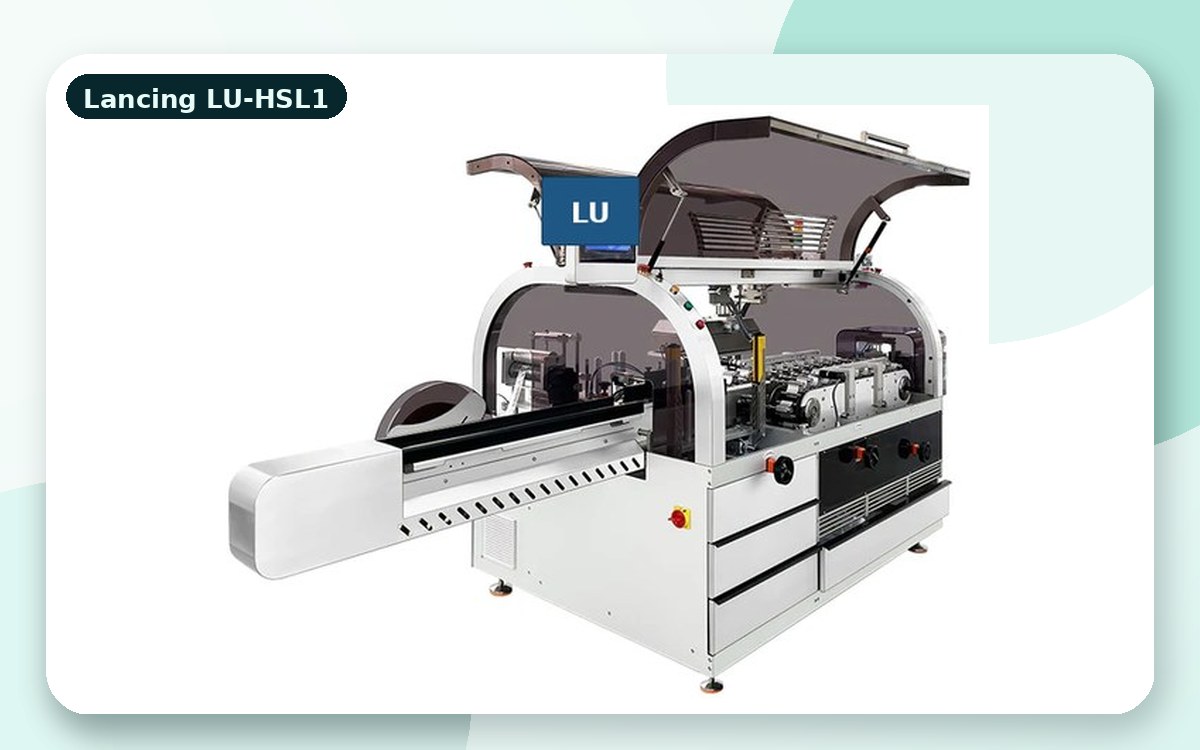
LU-HSL1 Horizontal Shrink Sleeve Labeler
A horizontal shrink sleeve labeler for small cylindrical and square products such as lipstick tubes, test vials and compact personal-care containers.
Where this machine fits
LU-HSL1 for real sleeve applicator projects.
Slim, lightweight or small products that need to be carried horizontally through the sleeving and shrinking process.
This page gives a practical shortlist view. Final selection should still be confirmed against your actual container samples, sleeve material, sleeve lay-flat, cut length, target output and tunnel requirements.
Best-fit applications
- Lipstick tubes and slim cosmetics
- Small cylindrical or square products
- Lightweight packs that are easier to handle horizontally
- High-throughput small product sleeving
Technical overview
LU-HSL1 key specifications.
Use these figures as a starting point for line planning. Customisation, tooling and sample testing can change the final specification.
Related Lancing LU models
Compare this model with other sleeve applicator routes.
Different packs may need a compact applicator, a complete applicator-plus-tunnel line, rotary sleeve handling or horizontal product transport.
Project support
Send samples and sleeve data before committing to a model.
Lancing can review the container, sleeve, tunnel route, utilities, output and layout before recommending the correct sleeve applicator configuration.
Application qualification
Prove horizontal transport, sleeve placement and shrink on the smallest products.
Horizontal handling can stabilise slim or lightweight products, but it also makes product length, cross-section, orientation and transfer points central to the specification. The difficult product is often the shortest, lightest or least rigid format rather than the largest.
Use the intended tube or vial, not an empty substitute with different weight or stiffness. Check how the pack is supported before application, through sleeve transfer and into the shrink process.
Horizontal product control
Record the contact points that support the product and identify any cap, nozzle, crimp, shoulder or flexible section that must not be squeezed or marked. Product guides should be assessed at start-up, normal speed and controlled restart.
Where the product has a required orientation, include the datum and acceptable rotation in the trial method.
Small sleeve feeding and cutting
Small sleeves can be sensitive to static, film stiffness, opening and cut-edge quality. Supply the production film and reel direction so the feed path, registration or fixed-cut mode and cutter can be checked under realistic conditions.
Measure sleeve position before the tunnel because a small displacement can represent a large proportion of the finished band or label height.
Tunnel and downstream transfer
Confirm that the tunnel support and heat or steam profile do not deform the product, disturb orientation or move the sleeve before it grips. Retain finished samples from the fastest planned rate and from stop-restart conditions.
Plan the discharge so warm or wet small products do not bunch, roll or enter downstream packing before they are stable.
Evidence pack for quotation and trial
- Smallest, largest, shortest and lightest approved products
- Filled or weight-matched samples with any sensitive closures fitted
- Sleeve lay-flat, cut length, film, thickness and reel direction
- Orientation, finished position, artwork and barcode criteria
- Required good output and stop-restart test method
- Tunnel support, cooling or drying and downstream transfer details
Buyer questions
Prove horizontal transport, sleeve placement and shrink on the smallest products. buyer questions
Does the published size range cover every product shape?
No. The stated circular and square ranges still require product-support, orientation, sleeve and tunnel trials on the actual formats.
Why use horizontal transport?
It can support slim or lightweight products more reliably than standing them vertically, subject to the contact points and transfer design.
How should the published hourly speed be accepted?
Define the actual product and sleeve, run duration, good count, rejects, allowed stops and the tunnel conditions used during the test.
Can the machine handle printed registered sleeves?
Provide the registration mark, print repeat and reel direction for review. The final sensor and cutting method must be confirmed with the reel.
What should be checked on square products?
Check rotation, corner shrink, seam location, sleeve twist and whether the product remains supported through application and tunnel transfer.
Can warm products be packed immediately after the tunnel?
That depends on the pack and downstream process. Cooling, drying and controlled discharge should be included in the line trial where relevant.
Small-format control
Approve horizontal support, product rotation and sleeve orientation as one format.
The LU-HSL1 publishes separate ranges for circular and square products: round diameters of 6–35 mm, square cross-sections from 6 × 6 mm to 35 × 35 mm, and product lengths of 50–180 mm. Those dimensions establish an initial envelope. Actual caps, shoulders, tapers, surface finish and weight distribution still need to be represented in the trial.
Use both dimensional extremes and the hardest geometry
A trial based only on a mid-range round tube does not prove the smallest square item, the longest vial or a product with an unusual cap. Include the smallest and largest approved formats plus the pack most likely to rotate, snag or shrink unevenly. Record every support or guide component and the setting used for each one.
Barcode and fine-copy checks should be carried out on cooled finished packs. A code positioned near a corner or high-shrink end can change even when the unshrunk print is correct.
Route comparisons
Use the lay-flat and cut-length guide to control the sleeve drawing and the tunnel guide to qualify the shrink process. Compare the LU-STB151 only where the product can be presented vertically within its published bottle reference.
Send LU-HSL1 product samplesHorizontal product control
Inspect support, rotation and transfer for small cylindrical or square products.
Small packs can roll, bridge or rotate between the application point and the shrink process. Prove the intended orientation, guide contact and discharge using the actual filled weight and surface condition, not an empty substitute unless its behaviour is documented as representative.
For printed sleeves, check registration and seam position around the product as well as axial sleeve height.
Evidence for each format
- Support and guide arrangement
- Product orientation and sleeve rotation
- Cut repeat and edge condition
- Pre-tunnel movement and queue behaviour
- Cooled artwork, barcode and pack condition
Horizontal-format evidence
Test the LU-HSL1 output reference with the actual product support and format extremes.
The published 4,800–7,200 pieces per hour range should be tied to the real product diameter or width, length, weight, surface and sleeve cut. Slim or lightweight packs may rotate, bridge or change orientation if guides, carriers or transfers do not support them consistently.
Test the shortest, longest, smallest and most difficult square or cylindrical format expected. Include start-up, restart and discharge into the next process so a stable application is not accepted in isolation.
Horizontal trial evidence
- Support and orientation from infeed to application
- Small-sleeve feed, cut quality and opening consistency
- Applied position and rotation before shrinking
- Tunnel transfer, cooling and discharge stability
- Good-output count with stops, rejects and actions identified
Keep square and round formats separate.
Products with the same nominal width can behave differently because contact points, corners and surface friction change the support requirement.
Use the container-handling guide and sample-testing guide.
Send LU-HSL1 product samples