Sleeve material
PVC, PET/PETG, OPS, PLA or other materials can behave differently during shrinking and should be checked against the tunnel route.
Full-body sleeve applicators
Compare full-body sleeve labelling machinery for 360-degree decorative sleeves, shaped containers and high-coverage product presentation.
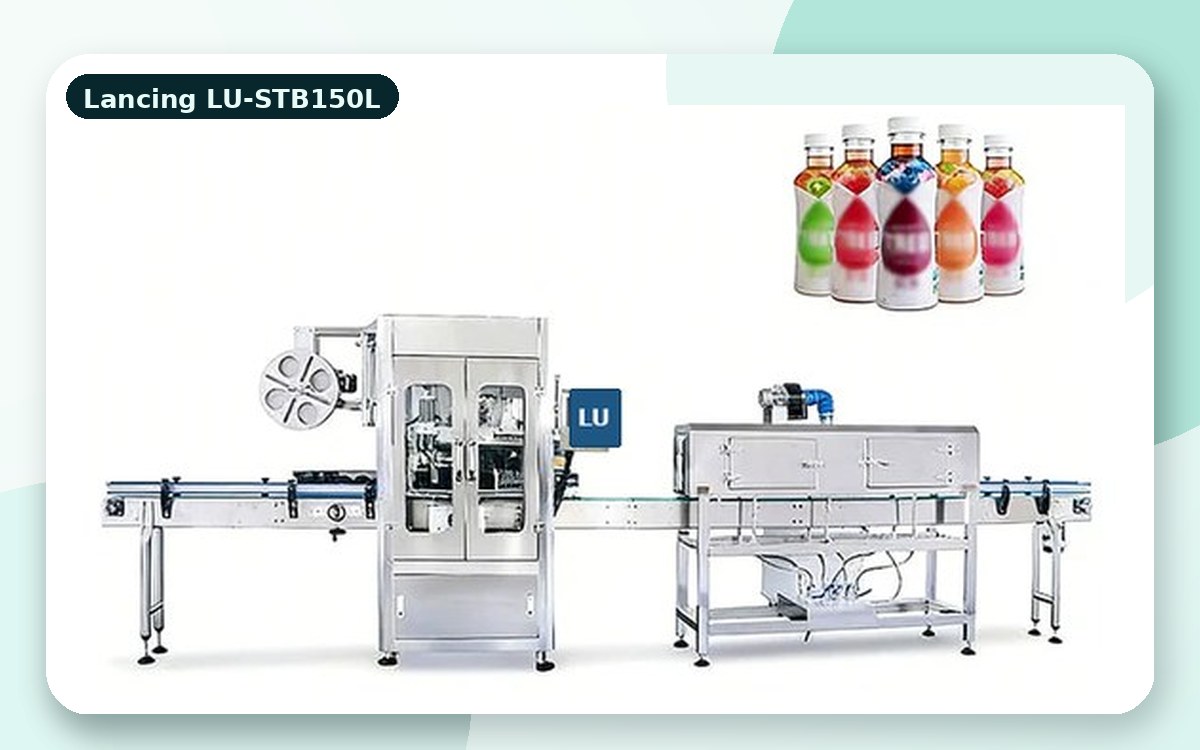
Decorative sleeve labelling
Full-body shrink sleeve applicators place a printed sleeve over the main container body before it is shrunk into position. They are often used when a pressure-sensitive label cannot deliver enough coverage, when the container is shaped, or when brand presentation needs a 360-degree sleeve.
The applicator, conveyor and tunnel should be selected as a system. Sleeve alignment, seam position, artwork registration, bottle rotation, container taper and tunnel shrink profile all influence the finished pack.
Planning
PVC, PET/PETG, OPS, PLA or other materials can behave differently during shrinking and should be checked against the tunnel route.
Curved shoulders, square edges and grip features may need controlled shrink and sample testing.
Artwork position, seam orientation and barcode placement should be checked before production specification.
Steam shrink may require drying or moisture handling after the tunnel, depending on the product and line layout.
Spacing and timing need to match the sleeve drop, cut length and tunnel throughput.
Format families should be reviewed so change parts and adjustments are practical for operators.
FAQ
Full-body sleeves are useful when you need high visual coverage, shaped-pack decoration or a sleeve that covers more of the container than a conventional label.
Often yes, but shaped and tapered containers should be tested because shrink quality and sleeve positioning become more sensitive.
Check container samples, sleeve material, lay-flat, cut length, seam position, artwork registration, tunnel type, output and available footprint.
Project support
A useful sleeve applicator shortlist starts with the real pack: container shape, sleeve lay-flat, cut length, required position, tunnel type, production speed and line layout.
Artwork and process control
A full-body sleeve changes shape across the container rather than shrinking uniformly. Shoulders, waists, grip features, square corners and bases can demand different shrink in different zones. The artwork supplier’s distortion process, the applicator registration and the tunnel profile therefore need one shared approved sample.
Do not approve artwork only on an unshrunk proof. Critical copy, barcodes, seam position and perforation should be checked on cooled finished containers produced with the intended sleeve material and tunnel route.
Place critical copy and machine-readable codes in areas that remain controllable after shrink, then prove them on finished packs. High-distortion shoulders, recesses and corners may need artwork compensation supplied by the sleeve and artwork specialists.
Keep the seam away from critical copy, opening instructions and inspection zones where practical. Where orientation is required, state the container datum and acceptable angular position.
Check the cut edge, sleeve height, twist and seam before tunnel entry. This isolates feed, registration, cutter, mandrel and product-pitch faults from shrink-profile faults.
Finished sleeve measurements should be taken after cooling because the pack can continue to settle as it leaves the tunnel.
A self-adhesive label may be more suitable when full-body coverage and high shrink are not required. Compare dedicated pressure-sensitive systems at Labelling Machines UK or Bottle Labellers UK rather than creating a competing label route on this domain.
Where the aim is to group multiple packs in PE film, the correct specialist route is Sleeve Sealers UK, not a shrink-sleeve label applicator.
Buyer questions
It describes how the sleeve material contracts under controlled process conditions. Use the film supplier’s data as a starting point and confirm the result on the actual container and tunnel.
The film may need to shrink more around a shoulder or other change in section, so printed elements can move or change shape unless the artwork is compensated and trialled.
Use a lower-distortion area where practical, then verify the finished code after shrink. Location should be agreed with the artwork and barcode specialists.
Yes. It affects appearance, orientation, perforation planning and the space available for critical artwork or inspection.
Sometimes, but looseness, placement and shrink demand can change. Every proposed size should be checked against the applicator and tunnel.
It may be preferable when the pack needs a conventional panel label rather than 360-degree shrink coverage. Use the dedicated Lancing labelling sites for that comparison.
Full-body finished-pack control
A full-body sleeve crosses more of the container’s shrink field than a short band. Confirm compensated artwork, seam position, local distortion, barcode function and the final top and bottom coverage using the intended film and tunnel process.
Use the applicable GS1/customer method on representative cooled packs.
Barcode guide →Inspect incoming reel, pre-tunnel placement and post-tunnel finish at defined stages.
Inspection guide →Assess the complete pack against current design-for-recycling guidance.
Design guide →Full-body sleeve answers
Full-body coverage makes container geometry, artwork repeat and shrink response part of the same approval.
Qualify glass, PET, HDPE, PP and metal packs by the actual shape, rigidity, thermal response and sleeve construction.
Compare container materials →Understand how the eye mark, sensor, film path and cutter control the artwork-to-cut relationship.
Read the registration answer →Check the first stage where the sleeve changes before adjusting the applicator or tunnel.
Use the fault-isolation sequence →Artwork release gate
A flat sleeve proof confirms print content, but it does not prove the position or shape of artwork after the film follows a shoulder, waist, grip feature or base. Approval should link the artwork revision to the container, sleeve construction, seam, registration mark and tunnel condition used for the finished sample.
Critical text, barcodes and opening instructions should be kept away from severe distortion areas where possible. When a symbol must sit near a transition, verify it on cooled samples from the intended production condition.
A change in film, thickness, ink coverage, perforation, container resin or tunnel utility can alter the result even when nominal dimensions stay the same.
Continue with the artwork guide and barcode guide.
Review a full-body sleeve projectAlternative sleeve method
A full-body shrink sleeve is relevant when the decoration must follow shoulders, tapers, waists or other changes in section. A stretch sleeve uses elastic recovery without a tunnel and may be considered for packs with enough suitable body area to retain the sleeve. The two processes require different machinery and should not be compared by nominal speed alone.
Use actual containers and film samples to check coverage, retained position, artwork, heat sensitivity and line footprint. The shrink sleeve versus stretch sleeve guide sets out the trial evidence for both routes.